Direct answer
Dynasty Mode lets you run a college football program as a Head Coach, Offensive Coordinator, or Defensive Coordinator. Start it from Game Modes, choose a school and role, review the contract and three active Athletic Director goals, then align recruiting, staff, facilities, NIL, and weekly decisions with the program's expectations. Online Dynasty supports invitations and cross-play; offline Dynasty does not.
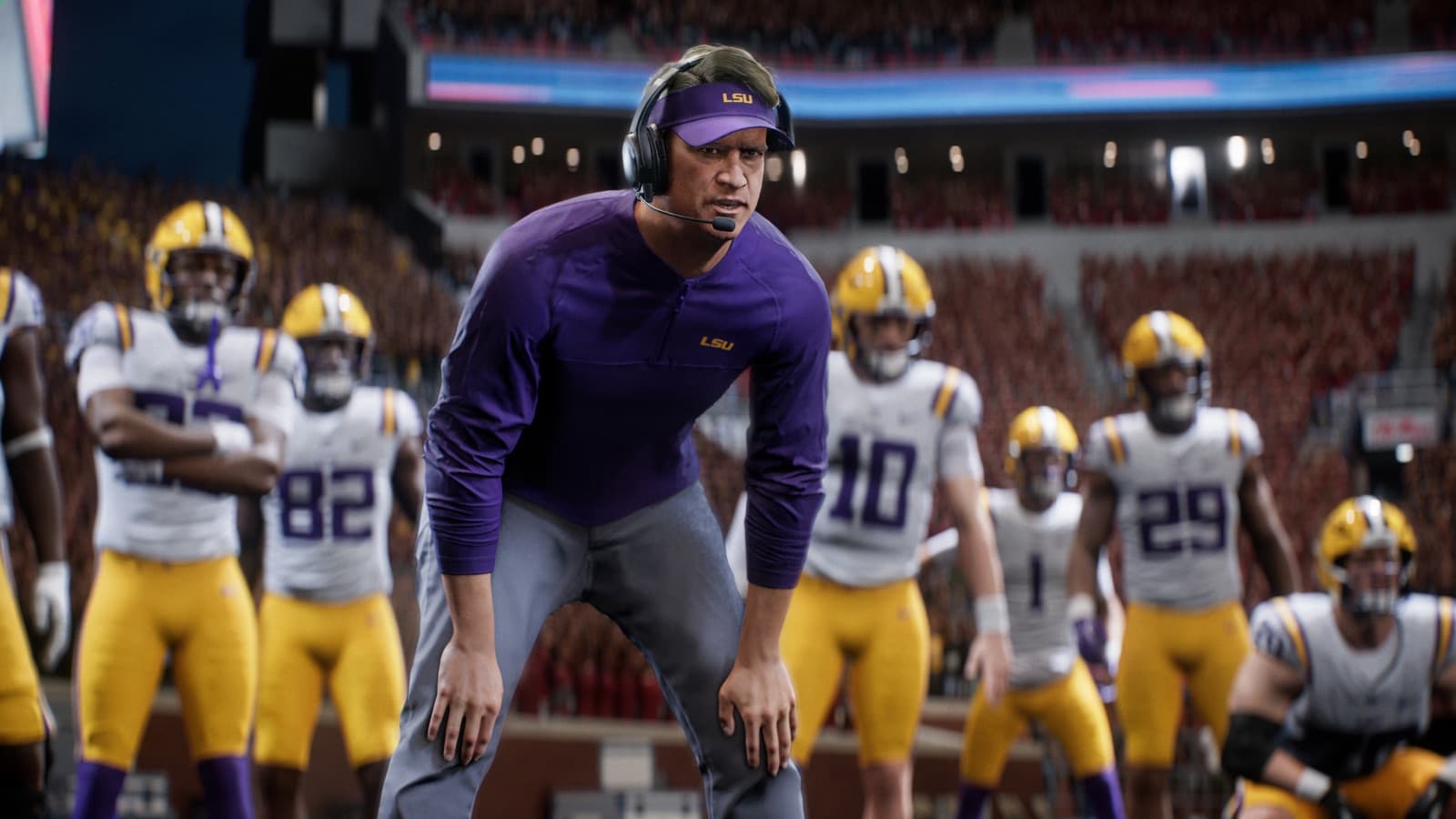
Official College Football 27 sideline cinematic.
Start a Dynasty and choose your coaching role
Dynasty appears under the Game Modes tab. A first-time player can create a league from scratch or join another user's league by invitation. During setup, you can update coach settings, finish choosing or creating the team, and sign the contract. EA lists Head Coach, Offensive Coordinator, and Defensive Coordinator as the playable roles, with career XP earned through tasks on and off the field.
The role changes the scope of the job. EA's deep dive states that a Head Coach manages support staff and coordinator hiring, while a coordinator does not control those head-coach responsibilities. Our recommendation is to choose Head Coach if you want the full program-management layer. Choose a coordinator role if you prefer a narrower career start and are comfortable leaving some Blueprint decisions outside your control. That is a play-style recommendation, not a claim that one path progresses faster.
Read Athletic Director Expectations before planning
Every school has Athletic Director Expectations shaped by its demeanor and program priorities. EA describes patient, balanced, impatient, and reactionary responses to success and failure. Each school also has three active goals. Performance against those goals affects job security, and goals can differ in importance, reward, downside, and timeframe. Most are single-season objectives, while some can cover multiple years.
Goal categories can include championships, rivalry results, statistical benchmarks, recruiting outcomes, territory control, facilities, Top 25 finishes, and win-rate targets. A school may emphasize a specific recruiting region or style of play, while another demands postseason success. Expectations also rise as a program improves, so reaching a standard once does not ensure that the same result will satisfy the school later.
Our recommended first action is to translate the three active goals into weekly decisions. Mark which goal has the largest job-security downside, which is attainable now, and which requires a multi-year investment. If a program values in-state recruiting, reflect that on the recruiting board. If it demands a rivalry win, protect roster health and preparation ahead of that game. These are planning suggestions derived from the goal system; the game does not require one universal priority order.
Build a Dynasty Blueprint around the job
Dynasty Blueprint is the annual resource plan. The program earns Dynasty Points and can use them across coaching staff, facilities, and name, image, and likeness. Programs begin with different strengths and resources, so the same allocation will not fit every school. The Blueprint also interacts with coach and coordinator abilities, My School grades, recruiting, roster management, and the pressure created by AD Expectations.
The calendar changes what can be managed. In preseason, a Head Coach can hire or fire support staff before that group locks for the season, and equipment upgrades are available. During the regular season, equipment and recruiting NIL remain relevant. Bowl season centers the coordinator carousel. In the offseason, the budget refreshes, major facility work becomes available, and NIL becomes important for transfer recruiting and roster retention.
A sensible beginner strategy is to identify one program weakness and one strength before spending. Use the strength to meet an immediate goal and invest in the weakness only when the return supports the chosen timeline. For example, a long rebuild may justify patient facility investment, while a pressured contender may prioritize resources that help the current roster. This is strategic guidance, not an official formula or guaranteed optimal allocation.
Recruit and retain with the full roster in mind
Recruiting remains central to program building, alongside roster retention and the Transfer Portal. The official deep dive says My School grades influence recruiting, player expectations, and roster management. College Football 27 updates several grades: Brand Exposure uses recent championships and playoff games in a rolling five-year window, Championship Contender focuses on current ranking, overall rating, and Blue Chip Ratio, and Proximity to Home uses city coordinates for distance.
NIL is split between recruiting and roster uses. Recruiting NIL can help pursue high school prospects and transfers, while roster NIL supports retention. Player expectations can change over a career, so an aggressive acquisition decision can create a later resource obligation. Facilities can improve development and recruiting profile, but they also require investment and ongoing resources. Those systems make roster construction a multi-season tradeoff rather than a single signing-day task.
Our recommendation is to set a smaller board that reflects positional need, school strengths, and active AD goals, then review it consistently. Do not spend every resource chasing one highly rated prospect if losing current starters would create larger holes. That is general Dynasty strategy, not a hidden recruiting mechanic. Use the interest, dealbreaker, school-grade, and NIL information shown in your league rather than relying on a fixed list that ignores your program.
Manage the season one week at a time
College Football 27 adds Weekly Practice Plans for player wear and tear, recovery, progression, and preparation. EA says the default plan is conservative, prioritizing recovery and limiting practice injury risk, while individual plans allow more control. Dynasty also includes changing weather, weekly recaps, an animated Heisman presentation, coaching decisions, and program-management tasks beyond games.
For a first season, we recommend a short weekly checklist: inspect active goals, review recruiting, check player condition, confirm the practice plan, and prepare for the opponent before advancing. Keep changes intentional. If a player is central to an upcoming priority game, weigh practice benefits against the displayed risk and recovery information. This is a decision framework, not a promise that conservative or aggressive practice always creates a particular outcome.
At milestone weeks, slow down. Preseason staff choices lock once the year begins. Coordinator decisions occur around Conference Championship Week and Bowl Season. The End of Season Recap refreshes the next Blueprint and handles major offseason choices. Advancing without reviewing a time-limited screen can remove an option for that stage, so create a manual reminder before the league moves forward.
- Review the three active AD goals and job-security impact.
- Update recruiting and roster priorities using current league information.
- Check player wear and tear before setting practice plans.
- Confirm staff, facility, and NIL actions available in the current calendar stage.
- Prepare for the opponent, then advance only when all time-limited decisions are complete.
Choose Online or Offline Dynasty deliberately
EA says up to 32 users can participate in a Dynasty offline or online. Online Dynasty supports invitations and cross-play. Offline Dynasty cannot invite other players, access online data, or use cross-play. If friends on PC, PlayStation 5, and Xbox Series X|S want to share a league, create the online form and confirm the supported cross-play setup before investing time in league rules.
For online play, EA recommends at least 2 Mbps download speed and 0.5 Mbps upload speed for quick loading and the best experience described in its help article. A speed result does not diagnose every server or network issue, but it is a useful baseline. If loading problems continue, use EA's current online troubleshooting guidance and record which users, platforms, and league stage are affected.
Commissioners should establish advance timing, difficulty, optional automation, and expectations before the first week. That is community-management advice, not an EA requirement. We also recommend a short cross-platform test before the league begins and a pause before major offseason transitions. Clear rules cannot change the game's mechanics, but they can prevent avoidable disputes when 32-user capacity, invitations, and calendar deadlines intersect.